Pages

Saturday, May 26, 2018

Kaminey: Of Love, Power, Greed and Honest Intentions

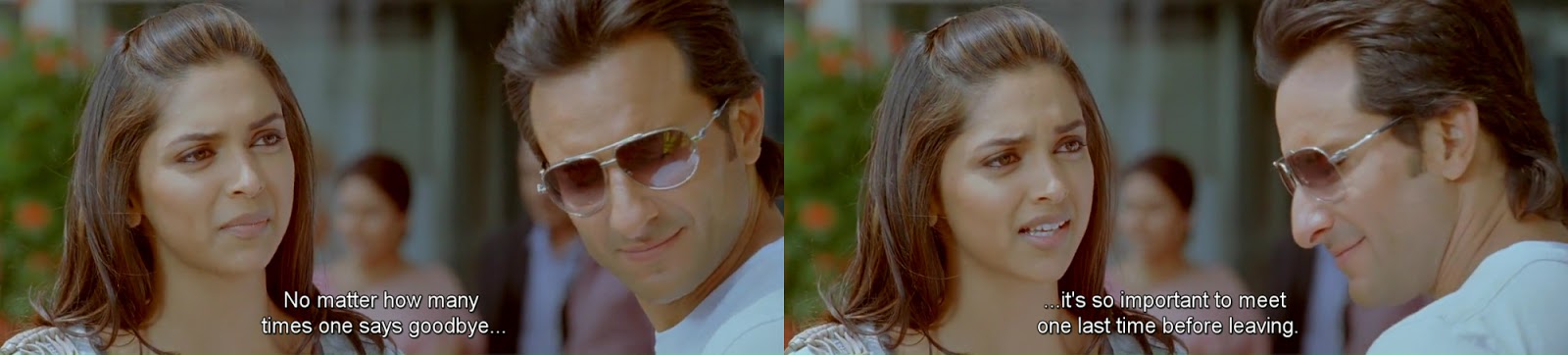
“Mere Har Jhooth Ki Niyat Sachhi Hai” Sweety, Kaminey

The year was 2009, Monsoons were striking quite aggressively in Madhya Pradesh, Swine Flu came knocking down the door of the country for the first time at Hyderabad airport and was on the verge of spreading pandemically, especially around Pune. The country was simultaneously preparing to celebrate 63rd Independence Day. Rajkumar Hirani’s 3 Idiots was still months away from creating history at the box office. I had finished my school by then and was quite content with the kind of marks I got in 12th, I knew what stream of specialization I had to enroll myself in for my graduation but the admissions were still a month away. I was a total “Fukra” so to speak, time was preferentially dedicated to movies and novels. By then, a name had subconsciously stuck with me; Vishal Bhardwaj, and till date I am not able to decipher why? Perhaps because of the iconic whistle from the song “Chhod Aaye Hum Woh Galiyan” from Maachis, or the brilliant adaption of Macbeth in the form of Maqbool or narrating the tragedy of Othello through the haunting eyes of Omkara. Be it through music or through his films, he always had something new to tell, and the narration of which attracted me (it still does but in a more dramatic way). The date was set, a day before Independence Day, there I was sitting at the third-class stalls in Jyoti Cinema (the only single screen theater back then which solely survived on the blockbusters of the Khan’s) waiting for the irritating washing powder Nirma advertisement to end, and let the lights go dim. Little did I know that after coming out of the theater singing “Pehli Baar Mohabbat” that nine years later I’ll still be so fascinated with that film; Kaminey.


Was it Bollywood’s answer to Pulp Fiction, as most reviews said at that point of time? Or was it solely because of the fact that people till then had not seen something so edgy, dark and yet very realistic in its nature in a Hindi film. Something that demanded your utmost attention. Kaminey narrates the tale of identical twins, Charlie and Guddu with speech inhibitions. Charlie lisps, whereas Guddu stutters. As Charlies proclaims, he runs, while his brother crawls. They are poles apart. Charlie is ambitious, while Guddu wants stability. Vishal Bhardwaj’s enduring fascination with the stories of underdogs is what formulates Kaminey into a such a riveting film. Both the brothers are the underdogs of the story, crammed around the world full of mean people, and that surrounding is what makes both the brothers subconsciously develop that mean side inside them. The atmosphere of the film is quite dark, revolving around the monsoon period of Mumbai, as if the film is trying to explore a darker side of these characters in a dark period of the city. We see a wide array of colorful characters in the film, from an archetypal Maharashtrian gangster turned politician, Bhope Bhau who has immense dislike for immigrants coming from North India and making their lives in Mumbai more difficult. We have another pair of brothers working at the Narcotic cell of the city, Lobe and Lele, who works for a bad-ass drug kingpin, Tashi. We have three more brothers, Mujeeb, Sumon and Mikhail who are associates of Charlie. We have a typical confident Maharashtrian girl, Sweety who does not shy away from taking control of the situation when her love is at stake.    

Kaminey touches various themes of the times we live in, Greed, Power, Ambition, Dreams, Politics, Poverty, Sexuality, Friendship, Love through the course of these characters. Kaminey feels so realistic, why? because the characters are so believable and the situations they get enrolled themselves are also real. Imagine a gangster with international drug traders and smugglers organizing a party and everyone is having a good time until the light goes away, then all of them sit around at a corner with candles lightened up waiting for the electricity to come back, or for that matter travelling in the yellow black taxi to go to a rival gang's place. There is no dramatization of any sorts. The unique point here is how wonderfully Vishal Bhardwaj treats his characters and takes the popular plot of the seventies Hindi films; estranged brothers, miscommunication, gangsters and interlace a narrative so real in its outcome. There are so many metaphorical symbols in the film specifically highlighting the mean side of a person. Every character in the film is a kamina of some sort, few innocent ones, while few dangerously dark ones. Even the little kid at one point realizes the magnitude of the moment and displays his greed to Bhope Bhau. Sweety pretends to stammer just like Guddu so that she can come close to her, Guddu, who planned his marriage five years later but gets seduced into an opportunity for an intimate moment. Charlie, despite knowing the consequences of taking the custody of Guitar takes a bold step in his life. All of them, literally are Kaminey. 


Charlie starts his introduction by describing his dream, the way he follows that one particular rupee, he cannot help himself but go after that. He comes close to a beautiful girl, and whispers near her ear “Blue Thunder” That one note changes the scene drastically, as soon as it rifts away from Charlie, we see lights go dim, and people fading off, and he is unable to catch it, the scene is a direct symbol of Charlie’s greed, and ambition to own his booking window. The face-off between Charlie and Guddu is another memorable moment in the film, Tassaduq Hussain's cinematography is top notch in that particular scene. There is also a nuanced tragedy depicted in Kaminey that we discover over the time in the film, where we learn about the suicide of Charlie and Guddu’s father who stole a watch, even the brothers claim that they were too young to understand the motives behind the actions of their father, but the tragedy is so personal and devastating that it makes the both the brother choose their own individual path.  The speech inhibitions faced by both the brothers are actually metaphors. There is this word that found recently, which made me think more deeply about the speech inhibitions of these two brothers; logorrhea. In terms of psychology, it is a disorder of communication which causes unnecessary loquaciousness and monotony, which can sometimes lead to incoherency. We have to come in terms with the fact that in today’s world, logorrhea is deep rooted, and it presents itself with several dangers, two major ones being miscommunication and conflicts. Everyone is speaking their heart out (social media) but no one understands or cares. Vishal Bhardwaj, probably makes us believe that the world is now convoluted around the web of trends, that to convey their state of mind or to express themselves, people should use either do it through silence or through speech impediments.   
 
The camaraderie between Mikhail and Charlie in Kaminey is extremely likeable, both are in a different state of craziness, yet they look after each other every time. Charlie considers Mikhail way more than his brother. The song Dhan Te Nan has ambiance of a rave party, where people are in some sort of psychedelic trance, as Mikhail points out in the earlier moments before the song, one can see people kissing, the dark red light of the room intersecting through the room, Charlie and Mikhail do get into that psychedelic trance, since both of them are high on Cocaine, and opportunity that the guitar brings with itself makes them ride high on dreams. Quite easily the show stealing scene of the film, where Charlie and Mikhail have a face of with Bhope Bhau and Gang, this is where we see a more psychotic and dangerous version of Mikhail, who gives a metaphorical warning to Bhope to side away otherwise he would take away his “Ek Mirchi aur Do Nimbu”. In the climax of the film, we see Charlie in a suit, owning a booking named “Mikhail and Co” which in the script is "Kismet and Brothers". They might have changed it considering in mind what Mikhail meant to Charlie.   

Vishal Bhardwaj never backs away from talking about the political scenario of the time the film is set under, we hear about Bhope Bhau's fundamental beliefs that immigrant have sucked the blood out of their "Mumbai" which for Guddu is still "Bambai", But Guddu does not let himself comes under the impression that he is an outsider, he answers the questions with the theory that immigrants like him are the sugar in the glass of a milk, it won't impact the quantity of milk, but would make it less sweet. There is constant belief in my opinion that somewhere somehow Vishal Bhardwaj picks out a situation or a character and through them he expresses his political views of the current times. He created that atmosphere in Omkara and connected the links between Othello, organized crime and politics of Uttar Pradesh. In 7 Khoon Maaf, as we travel through the life of Susanna Anna-Marie Johannes, the chapter of her third husband, Wasiullah Khan (Musafir), we see the times when Babri Masjid Demolition occurred and changed the political climate of the country forever. Vishal Bhardwaj’s strongest political commentary came through the tragedy of Haider where a brave attempt was made to talk about the mayhem cause in the heavens. In Matru Ki Bijlee Ka Mandola, he talks about the state of farmers and the kind of treatment they are given on the ground level, and that too through black comedy.

The irony of the story between Guddu and Sweety is quite amusing, we are introduced to Guddu, who works at a NGO and educates Sex workers about safe sex and condoms, and yet it was his lost in the intimacy kind of the moment that lands him up in a situation where Sweety gets pregnant. He has a manually prepared poster of his plans in life, that marks the important events he should accomplish by specific year. Sweety is a quintessential Vishal Bhardwaj female protagonist, who lives her life the way she wants to irrespective of any patriarchal approach by her family, she comes out a strong character. My heart sank a bit, when I saw her on the screen, my immediate reaction was "Don't make me watch her succumb to another tragedy by the means of people around her, just like the way it was done to Nimmi and Dolly Mishra", but as we see more of them, I observed that Guddu and Sweety are the perfect love story of the times we live in.  


Kaminey’s music appears like a tribute to the music of 70’s, there are RD Burman songs placed in the narrative which works so beautifully, the popular Dhan Te Nan is a tribute to the 70’s style retro period. When Charlie gives Francis a surprise visit at the hotel, we hear the song “Do Lafzo Ki hai Dil Ki Kahani” from the movie The Great Gambler (1979) played at the background, Similarly when Charlie gets hold of the guitar, he plays the song “Duniya Main Logo Ko Dhokha Kabhi Ho Jaata Hai”  The title song of the film is what deeply wins you over, the song written by Gulzar and Sung by Vishal Bhardwaj expresses the state of mind of Charlie, we see a reflection of Charlie walking through the railway tracks. The title song 'Kaminey' encapsulates the soul of Charlie and the theme of the film as well. “मेरी आरज़ू कमीनी, मेरे ख्वाब भी कमीनी, एक दिल से दोस्ती थी, ये हुज़ूर भी कमीने”, The intentions, the dreams, the one absolute close friend, all of them were Kaminey.

Reflections in Mirrors play a significant role in most of Vishal Bhardwaj's films, as if when the characters look into the mirror, they see an actual reflection of themselves of who they are in reality, and what they should be doing instead of pretending to be something else in front of other's. Charlie looks into the mirror, and starts playing the guitar, confident that the guitar will change his miserable life. Guddu, on the other hand looks into the mirror and forces a fake smile and convinces himself that he is happily marrying Sweety. Speaking of true reflections in mirrors, who can forget the iconic moment of realization of Langda Tyagi in Omkara, he breaks the mirrors with his hands and smears the blood on his forehead mentally proclaiming the much-deserved position of Baahubali that he felt, he rightfully deserved. It was that particular discovery of his reflection that made him plot the ultimate tragedy. In Maqbool, a broken Nimmi asks Miyan about the purity of their love and we see a reflection of the couple. In 7 Khoon Maaf, Susanna looks into the mirror, broken and bruised, she tries to hid her pain by applying all sorts of make-up. We sense an innocent side of Susanna, who has come to the realization that she has once again failed on her quest to find love, and soon all of her innocence will be vanished once she rings the bell. In Haider, when Haider calls his mother, Ghazala to meet her, he directs her face to a broken mirror, and tells us about the dual face she has, this is also reference to the theme of Omkara, where Dolly Mishra’s father warns Omkara about the dual face nature of a woman. We also see Harry Mandola, holding a bottle of alcohol and struggle with his alcoholism in Matru Ki Bijlee Ka Mandola. The Mirror reflects the other 'Harry', he becomes once he is intoxicated under the influence of alcohol.  A mirror is not always true version of the reality, it's a reversed version that we see, the directions are opposite in front of a mirror, left becomes right. Another idea behind the use of reflection in mirrors is to hold a deeper symbolic meaning in the context of the situation that the character is going through. A recurring idea expressed through reflections in mirror is about duality of the person. Reflections in Mirrors also to a certain extent symbolizes the narrow gap between Conscious and Unconscious mind, the reflected image is an indicative of the depth of their unconscious mind. The beauty of mirror reflections in Vishal Bhardwaj's films is that they are placed subtly in the narrative, which points out an extreme expression from the person. We can presume that reflections hold an alternate reality that the person desires when most of the time they are gazing at themselves for a long time.


Kaminey is not Vishal Bhardwaj's first encounter with twins who are pole opposite in nature, in his first film as a director, Makdee, he told the story of two sisters, Chunni and Munni. The two sisters are more or less similar to Charlie and Guddu, one of them is notorious, while the other one is genuinely straight and simple. On a closer look, I found several more references of twins in Kaminey, Lobe and Lele appears twins, the twin diamonds which Cajetan brings in return to get hold of the guitar. At one point of the film, we see a pair of crow, two kids flying kites. In his other films, there are also important roles essayed by siblings. The popular witches from Maqbool, Inspector Pandit and Purohit can easily be assumed as twins, the fanatic Salman brothers from Haider too makes this list.     


Another central facet in Vishal Bhardwaj's films is most of the important characters are driven by the lust of greed and power, and it is this quality in them which makes them fascinating figures. Crime is always juicer than spirituality, and the characters in Vishal Bhardwaj's fictitious world does not even make an effort to hide those features and live a pretentious life. In Makdee, we had a witch who cons an entire village just because of the greed she has developed for evil intentions. In Maqbool, Abba ji is poetic in his nature, and considers Mumbai as his beloved, yet he does not shy away from killing his brother in law for his betrayal. In Omkara, we have Bhai Saab, who has an incredible aura surrounding him, he values power more than anything else. He is living a lavish life inside the jail premises and controls the organized crime syndicate. In an outrageously funny scene, he tells Langda Tyagi to pull the chain of the train and asks the TT to take a you-turn and drop these guys back. Even in The Blue Umbrella, Nandu is driven by a surreal greed to capture the Blue Umbrella from Biniya, this is what drives him in his life. 


I read the screenplay of Kaminey, and recalled a line from Gulzar Saab, where he tells that films are made on two tables, Writing and Editing. This scenario become much truer if you take an example of Kaminey, the original screenplay is a lot different than the one we see on the screen, it is more violent on paper, but the one which we see on the screen feels more real. There is this whole angle of how Cajetan (a name in reference to the Kenyan writer, Cajetan Boy who developed the idea of Kaminey and sold the rights to Vishal Bhardwaj)  gets the hold of those diamonds, a bloody war like sequence somewhere around Africa, but it is not present in the film. The prime difference between Screenplays and Novels is the role of the Director, Novels are exclusively for writers, where for a screenplay to work, we need a director with the clear vision about how he visualizes the words.

The climax of the film is simply a poem about the actions these people take in their lives, there is a violent shootout between a lot of people, Cocaine getting burned, every is aimlessly shooting at whomever they see, yet amidst through all these chaos, it’s the song that narrates the climax so beautifully, the lust for power and a tiny moment of opportunism to get a second chance in life. That’s the magic of Vishal Bhardwaj’s music, he use it to express his stories and situation, people feel the music and gets the ton of the scene or the mood of the character. Be it a tragedy, a fable, chaos, loss, redemption, there is always a poem to narrate it.

And what about the scene between Guddu and Sweety near the petrol pump, how often do we see a Hindi film Hero tell us that he read Champak, Nandan, Bela Bahadur, Guddu tells us very proudly while narrating his love encounter with Sabiya Layik Ahmed, and what makes him recall the incident from class sixth, in which he almost failed, perhaps his insecurities about love. He realizes that Sweety does not have a speech impediment, he simply communicates his thoughts about people picking on him due to his vulnerabilities, and this is the point where Sweety simply says “Mere Har Jhooth Ki Niyat Sachhi Hai”


Love is a such a strong volatile emotion, and it’s quite needless to say, an extremely special sense of experience for a person to feel that feeling around and, Mere Har Jhooth Ki Niyat Sachhi Hai. It has all the colors yet can be gruesomely dark, and destructive and, Mere Har Jhooth Ki Niyat Sachhi Hai. Love will always trigger the strongest of reactions from us, it makes us, it helps us discover a lot of things about ourselves and yet it has the capability to break us and Mere Har Jhooth Ki Niyat Sachhi Hai. Love is about stuttering together, locating flaws, and finding peace in those human flaws, and Mere Har Jhooth Ki Niyat Sachhi Hai. Love is about recalling an incident in the middle of the road at midnight, where your heart was shattered forever, because Mere Har Jhooth Ki Niyat Sachhi Hai. Love is about crying your heart out, screaming on top of your voice, and talking in silence with each other because Mere Har Jhooth Ki Niyat Sachhi Hai. Love is metaphysical yet very somehow a bit empirical. Love is in the laughter, Love is also in tears, because Mere Har Jhooth Ki Niyat Sachhi Hai. Love is in ecstasy, love is also in grief, love is a disease, and yet the diagnosis itself, because Mere Har Jhooth Ki Niyat Sachhi Hai. Love is finding answers to uncanvassed questions. Love is reading Gulzar’s words together in solace, because………… Mere Har Jhooth Ki Niyat Sachhi Hai  


Saturday, May 12, 2018

Lone Fox Dancing: Autobiography of Ruskin Bond


If there is one thing among a lot, I wish to do in my life before I die, is to go into the Cambridge Book store of Mussoorie on a cold Sunday Evening, and meet Ruskin Bond. I would probably be overwhelmed by seeing him personally, would fumble up words like I usually do most of the time and tell him “Thank you for all the memorable stories you have told over the years, you are my childhood Hero”.  


Lone Fox Dancing is an autobiography of one of the most celebrated, popular, influential and treasured writer in India, Owen Ruskin Bond. For the better part of more than six decades, Mr. Bond has earned his livelihood through writing. For years, he has played a significant role in many childhoods through his writing, be it telling a simple poem, making us laugh through funny anecdotes involving himself or people around him, occasionally spooking us through the horror stories he told, spelling magic around the minds of his readers through the visuals of Himalayas, coming out of his comfort zone and writing erotica in his own distinctive style and giving us an example of his versatility in terms of the subjects he wrote about, but most importantly, he has kept us engaged, engulfed and emotionally invested in the fascinating world of the stories he told, the characters extracted from his vast range of imagination and real life incidents, the painting of hills that he presented in front of our eyes, the visuals of gigantic Himalayan mountains that peeped through his words, the chaotic atmosphere of Indian Railways that formed the background of many of his stories, the colorful flowers that he classified so elegantly, the wide array of trees he differentiated with such ease, the love for food that he described with such passion. But, what’s the story behind the man who has told us so many stories. What prompted a young man to become fascinated with hills, what was the driving force behind the love for reading, what was the inspiration behind the first poem that he wrote, who was the first author that he read……

Lone Fox Dancing captures the ultra-extraordinary journey behind an extraordinary life. The extraordinary life of Ruskin Bond

The book chronicles four phases of his life: Childhood, School Years, Life in England, and finally returning to India and establishing himself as a writer.

“We get used to happiness very quickly, more so when we are children”

He opens up about his childhood, and yet again, with easily relatable moments (courtesy of all those stories he had told through the years) and simple writing tells us about the kind of immensely close relationship he shared with his father, Alexander Bond. Ruskin starts from the early days in Jamnagar where his Ayah would pamper him, and made him eat paan, which little Ruskin would love wholeheartedly. He also narrates us the inspiration behind his first poem. The childhood trauma to enemas, the isolated time in the boarding school, the fascination with food. The narrative is simple and elegant, and presented with a perfect balance of highs and lows of his childhood.  The earliest attempt on his part towards any form of literature was a direct result of his love towards his Ayah at Jamnagar, the second most important person in Ruskin's life, first obviously being his father. She becomes his inspiration of sorts of his guiltless first attempt at writing poems, he does well, and simply compares her to a papaya. The night held no terror for him, it gradually became his friend, and gave him the much-wanted space he needed but didn't get during the day time. Starlight, Moonlight, early dawn, all became precious moments of loveliness for him. The timelessness like atmosphere of the palace, the sensations of the big garden, the spiral shaped stairs all became a part of the Ruskin’s adventures in Jamnagar.

The most delightful relationship we read about in the book from Ruskin’s life is between him and his father, coincidentally he was named “Ruskin” after the Victorian essayist, John Ruskin, because apparently, Ruskin’s father appreciated aesthetic, imaginative and contemplative life. It appeared to be an omen, what the little Ruskin was going to do in his life. Mr. Bond’s not so stable relationship with his mother, the melancholic state of his mind after his father passed away, discovering friendships, and love. He clearly does not try to sugar coat the kind of cold relationship he shared with his mother and recalls the difficult lonely time he had to face in the absence of his father. What we read is not actually about Ruskin Bond, the author, but rather Ruskin Bond, a child who is lost in his own dreams.

Starts another phase in Ruskin’s life, when he goes to Bishop Cotton school in Shimla, he explores a different side of himself, not the kind of rebel which he tried to pull off in his last school, where he along with a friend tried to run away from the school, and not being able to cross the line of freedom and end up getting caught. As a writer, he would later on use this incident as a metaphor to symbolize seeking freedom and control over one’s own destiny by crossing the lines of oppression. He left a long-lasting impression on his school friends, acknowledging the coolness of the fact that his father worked in the Royal Air Force helped him gain more popularity in the school, a time where World War II was far away from ending, He made his own little world around the aura of the school with his friends. How Ruskin uttered the wonderful line “And when all wars are done, a butterfly will still be beautiful” lying in a tunnel with his friend Azhar.

The marital problems between his parents had gradually started affecting him in some way or another, his father’s loneliness brought a sudden change on the shy Ruskin. The time spent with his father, which he considers to be the happiest days of his childhood because he was not told to live his life in a certain way, he was free bird, he could read all day, listen to music, watch movies, play with his colony friends, get fascinated by his father’s stamp collection. At a certain point when Ruskin is having the best time of his life with his father at Delhi, he mentions that "New Delhi was a safer place in the 1940's than it is in the 21st Century". Few years later, Ruskin’s father passed way due to several attacks of malaria, the last letter which Ruskin's father wrote to him is sure to bring a tear rolling down the cheeks as we read it, primarily because we, as reader by the first part ends have realized the significance of Ruskin's father in his life, and when you read how heartbroken Ruskin is, post the sudden demise of his father, one cannot imagine how a ten-year kid be expected to remain calm. Flight Lieutenant Aubrey Alexander Bond had left an indelible vacuum in the life of Ruskin Bond. It was difficult for Ruskin to reconcile with the loss, and he wrote “There being no tangible evidence of my father’s death, it was, for me, not a death, but vanishing, and I subconsciously expected him to turn as he often did, when I most needed him and deliver me from an unpleasant situation” Years later, Ruskin would confront his feelings from that period in his short story “The Funeral” where he would write about the insensitive nature of adults of not allowing an orphan protagonist to attend his father’s funeral.

“If one is present when a loved one dies, one is convinced of the finality of the thing and finds it easier to adapt to the changed circumstances. You never really get over the loss of a beloved. You learn to live despite it.”

He entered another interesting phase in his life soon afterwards, where he would now be a part of a family that appeared to be lost in their own lives, but Ruskin found something that would change his life forever; Books and How an odd friendship with Miss Kellner resulted in Ruskin's introduction to fascinating literature. Reading became his religion, and as he himself mentioned a couple of times that it was books helped him discover his soul. There are sweet little tales of Ruskin's first crush, first sip of rum which lead to his first kiss on the lips under an intoxicated state. The string of happiness which little Ruskin felt after the presence of snow in Dehradun. You could sense a flashback of all those novels which you have read, authored by him connecting all the dots about the beautiful scenery he would put forward about the hills.

Destiny had other plans for “Bond Sahid ka bachcha”, no one back then had any clue that their Baba would go on to become one of the most influential writers in the country.


Destiny took another major turn when Ruskin went to Jersey and then to London to try and achieve his ambition of being a writer, talks of unrequited love, repeatedly telling himself that the west part of the world would give him more opportunities, but as a reader one can feel the restlessness that was building up inside Ruskin, his love for the valleys, and mountains could not be suppressed for a longer time, “All I really wanted was my little room back again” he wrote.

He soon returned to India, and we meet more colorful characters that appeared at that point of time in his life, and most of them would go on to become actual characters in his stories, around the summer of 1963, Ruskin Bond finally settled down in the hills. The last part of the book felt like a revision of all the novels written by him that I have been reading so far, and gradually felt that this is the story behind this man.

The oeuvre of Ruskin Bond’s writing is such, that after reading his work, he makes you feel guilty of not living a life under the watchful eyes of mountains, not taking a moment of solace out of our hectic schedule and appreciating life with all its beauty and charms. There is so much to know about the legendary writer, but the autobiography focuses majorly on his childhood, and how the various incidents shaped the man we know today through his stories. While reading the book, there are overabundance of memories which strikes my mind about all those stories I have read while growing up, there is a sense of reality that Mr. Bond presents, and how he weaves his characters around the nature or how he shapes the nature to be the center of his stories. It is quite an amusing fascination that Mr. Bond, right from his childhood developed towards admiring the beauty of nature, and for me no one loves the nature the way he does through the structure of his words. Similar to numerous Ruskin Bond’s Novels, there are some common elements, mountains, trees, People of colorful nature, animals, foods, drinks, but what is most important is the sincerity and honesty with which Mr. Bond gives us a glimpse of his personal journey. The man who preferred Silence of the mountains against the chaos of metro cities continues to thrives his stories from the simplest of moments in life, perhaps the milieu of Himalayas gives him a sense of freedom to express himself more freely 

“The kindest people are often those who have come through testing personal tragedies”


Lone Fox Dancing is not a path-breaking autobiography by any means but it never even tries to go that way, it’s as simple as his other works, the subtle difference being the personal moments that are painful and yet delivered through words with honesty, because observing the simplistic of moments in life has always thrive him to form stories. There are moments of longing for love, be it from his father, mother, friends, family, and long after that longing is vanished, there isn’t a bundle of sorrow feelings, rather the joy recalling those moments spent in their presence, perhaps this quality is what makes him grow an unaltered fondness for the beauty of life. 

My rendezvous with Mr. Bond started when I first read “The Blue Umbrella”, once I completed that novella, the name Ruskin Bond stayed with me, as I started exploring his works, the iconic "Room on the Roof", the timeless classic “Time stops at Shamli and other stories”, the quest of freedom in the “Flight of Pigeons”, the wildness of “Sussana’s Seven Husbands”, the realization of a man’s sexual nature in an erotica "The Sensualist"  and many more of his stories, I was transported into the world that Mr. Bond wanted to us see, the silence of the nights, the internal peace felt in a moment, the beauty of rain drops, the aesthetics of trees, the charm of a song, the satisfaction of hearty laugh. The solace I found and still do in reading his works is cannot be judged or even defined precisely.

“As a boy, loneliness, As a man, Solitude. The loneliness was not of my seeking. The solitude, I sought and found”

I wish that Ruskin Bond had written more about his craft, but this feeling soon vanished after I realize that his most of his stories are directly a result of certain circumstances that he faced in his life, the longing of love, the need of comfort at times, of course there are many stories that completely are a product of his imagination, but the looking back at his journey, and his fondness for the valleys, there is a part of me that wants to believe that most of his stories does have a bit of personal attachment to it.

At around 75 years of age, Mr. Bond made his debut for the big screen in Vishal Bhardwaj’s “7 Khoon Maaf” and played a cameo in the film based on his novella, which he himself adapted into a short story, which was then transformed into a full-fledged screenplay. Just few seconds of seeing him on the big screen with the character that he created so beautifully was really a treat for his fans. 


Once I finished reading the book, I could not help myself but picture a scene in my imagination where Ruskin Bond is talking an evening walk around the trees, simply enjoying the calmness of the valley, and just next to him, we see the little Ruskin from his Jamnagar days emerge out of nowhere, he throws the most innocent of smiles at him and makes him hold his tiny fingers.

“Well, life worked out pretty well” He exclaims to Ruskin

The 83 years old Ruskin looks at him, nods in approval 

“Up for a dance, Lone Fox?” he asks.

"Always" he replies. 

“I am like a shopkeeper hoarding bags full of grains, only I hoard words. There are still people who buy words, and I hope I can keep bringing a little sunshine and pleasure into their lives till the end of my days”


Saturday, April 28, 2018

Tu Hai Mera Sunday: Of Hope, Sunday Mornings and Coffee Beans

“It’s Okay, It’s Life”-Tasneem, Tu Hai Mera Sunday


Milind Dhaimade’s “Tu Hai Mera Sunday” is one of the most endearing films I have seen recently, a film that makes you realize the charm oozing out of a Sunday morning holds a very precious value in life and should be duly acknowledged. The film is about a group of friends looking to find a suitable and spacious place in Mumbai to play a game of football, a game so important in all of their lives that they are willing to even travel to a neighboring state so that they can have a decent game. The film takes the game of football and Sunday as two symbiotic metaphors and narrates us the tale of optimism filled with romance and happiness. There are talks of escapism, realization of being content and happy in our lives, importance of space (both physical and emotional) and an amusing quest of being a nice person.


What makes Sunday such a special day in a week? A brief stress buster compared to the busy schedule in our lives, a day which allows us a moment of isolation against the world, a period of procrastination where we aimlessly lie down in the bed and ponder about all the activities in our lives. I do not have an answer to that exactly, but after watching the film I did realized why Sunday marked a special event for Arjun, Jayesh Bhai, Mehernosh, Dominic and Rashid, the five-principle protagonist of the film. It allowed them to escape from their mundane schedule of life, and without worrying about any circumstance, they enjoyed a breathless game of football. A simple period of leisure on a bright sunny Sunday morning through a game of football is what all them simply desired. What chain of events happened in each one of their lives throughout the week after an eventful Sunday’s game formed the rest of the film. 

There are underlying strings of hopeful moments weaved all over the film, a girl is divorced because she gives birth to deaf kids, and with a shining smile tells the other person to not feel sorry, it’s alright because it’s life. It is delivered with utmost innocence, and for me becomes the soul of the story. This theme of this various unaltered moments of hope staged throughout the film is because of the fact that the backdrop of the story is Mumbai, where it is vital to place one’s dreams, and hopes with other feelings of despair together through a duct-tape and organically get habituated to its consumption in life. What the film did was made me recall most of the iconic moments from Hindi Cinema that originated (on-screen) from the land of opportunities. In a way, the film’s milieu of Mumbai is symbolic of the fact that now dreams, hopes, despair and survival of the thousands are overfilled into a tiny space way above it’s limit, and one is bound to change as a person when emotions are jammed together in a specified range of area, yet the driving force of hope amidst all the issues thrown in front of the characters makes them go fix those issues in their own way.


There is a mention of the word “Escapist”, where Mehernosh erupts at a certain point, and blames the other guys to be nothing but united in escaping their own individual lives. Well, he does make a very valid point. Escapism is the tendency to distract ourselves from any unpleasant, boring schedules of work and allying our minds into something else, be it movies, books, daydreaming, fantasy or any other form of entertainment. In a way, escapism can also be summoned up as a path where we run away from reality, just for that brief moment in our escapist cave, we feel more of ourselves, discover more about ourselves through our means of escapism, even in the context of the film, we do realize that yes they group of guys are running away from their realistic lives, and finding solace in a game of football on a Sunday morning, but only through this event in their lives, they discover a lot about themselves, and how they perceive their own individual relationships. Dominic earning his livelihood by being dressed as a joker at kid’s parties which is not going too well with him (ends up yelling at kids), Rashid discover old memories in his room, he is made to realize this sense through the presence of a rat in his room, Mehernosh wants to confess his feelings to a colleague yet had to see her suffer everyday through his boss, and Jayesh bhai trying to escape his noisy family to have a moment of peace of his own.    


The most charming scenes in the film happens between Arjun and Kavya, where both of them discover each other under an odd situation where Arjun acts as father-sitter for Kavya’s father who is suffering from dementia. Kavya narrates an incidence to Arjun, about how in her childhood she had a massive attack of pneumonia, and it was only her father who had not given up on her health. Another significant scenario of how beautifully and subtly director Milind Dhaimade brings the essence of hope into the scene. Arjun explains to Kavya about his decision to stay near his loved ones and be happy in his life. There is a very sincere honesty in the way Arjun tells us about how he did not want to enroll himself into the corporate culture after witnessing a bizarre incident that changed his ideology towards life. The moments between Kavya and Arjun at the beach reflected a state of hesitation on both ends, where each one of them expected the other person to make the move and initiate the real talk. They talk about how there is no space to enjoy little moments of joys in life, again a reference to space in the film, this time, perhaps it was being referred to an emotionally comfortable space of being with someone special, since the space in all the context of life has crammed up, leaving us vulnerable at times. At the climax point, they do meet at the terrace of a building, finally getting their desired emotional space to have a moment of intimacy. Kavya and Arjun’s chemistry in the film is quite equivalent to the coffee beans used in their relationship, it’s totally refreshing.   


Hindi Cinema has evolved tremendously over the time regarding the fascination with the city of dreams called Mumbai. Earlier the filmmakers focused on telling the stories of outsiders coming into the city with nothing but aspirations to earn a livelihood. Be it the charming Raj from Raj Kapoor’s “Shree 420”, who is seduced by the glamour offered to him in the city.  Vijay and Ravi with their mother looking to start a new chapter in their lives post an unfortunate incident in Yash Chopra’s “Deewar” comes to Bombay. The legendary Velu Naicker’s moral compass from Mani Ratnam’s “Nayakan” that told the tale of man drawn towards the darker side of a city. Vidhu Vinod Chopra’s “Parinda” explored the darker side of the city more extensively through two brothers with the metaphor of flight of freedom that pigeons took around the city. The iconic dialogue from Ram Gopal Verma’s cult film “Satya” where Bhiku Mhatre proclaims to be the king of the Mumbai. Satya, in my opinion was one of the early films that went ahead and explored Mumbai more as a character than simply a background of the city. As the film goes on, the more we learned about the mood of Satya, there was a parallel narrative of the moods of Mumbai in the form of it’s monsoon period, how the city functioned during Ganesh Chaturthi.  Over the years, films based on Mumbai have undergone drastic transformations, as if the filmmakers are no longer fascinated with the idea of an outsider coming into Mumbai and trying to survive in the middle of the chaos, now the focus has shifted to the insiders, their tales of survival. Nishikanth Kamath’s 2008 directorial venture “Mumbai Meri Jaan” talks about the lives of common Mumbaikars post the horrific 2006 train blast, and ends the film with the song "Bombay Meri Jaan" from the 1956 film C.I.D. I remember a conversation from Vishal Bhardwaj’s “Kaminey” where Bhope Bhau (a native Mumbaikar) tells Guddu that migrants like you are chewing the city like termites, to which he replies a statement that his father used to tell him that if the city is a big glass of milk, people like us acts as sugar, if we leave, milk will be unaffected, but will turn bland. The whole political, social and economical dynamics of the city has changed, so has the stories around Mumbai. It’s as if the stories of outsider’s no longer interest filmmakers, whereas the stories of problems and survival of Mumbaikars gives them a far more better content to project it on screen.

There is a similar theme of Space related issues in Anand Tiwari’s “Love Per Square Foot”, where a young couple is on a quest to find a decent space which they can call their own and owning a piece of land of our own in a city like Mumbai appears to be a mammoth task. The contrast between Love Per Square Foot and Tu Hai Mera Sunday is like talking about day and night, and no it does not mean the former is a dark story, by the comparison I mean, one is set against a backdrop of a dream of owning one’s own house whereas the latter talks about the hope on a Sunday morning. One talks about love, the other talks about friendship both being affected by lack of space in a city. In both the films, the characters are in desperate need of space, again the need is of both physical and emotional space. Sanjay Chaturvedi who lives in a railway quarter desires to have his own place, whereas Karina D’Souza wants to get out of a forced relationship and start on her own. In a quite ironic situation considering the context of the film which is dealing with lack of space in Mumbai, both of them share a kiss on crowded local train.    


I really find Arjun’s portrayal of being a nice guy and focusing on being happy with himself rather than aimlessly chasing the corporate dreams quite amusing. The film does not exaggerate this idea with any philosophical concepts which might have made it appear a bit pretentious on Arjun’s part but it appears simple and straightforward. He helps an old man without any motive, drops his plans of settling in either Europe or Brazil, because he realizes the value of happiness and being content in our lives, it’s a tricky thing to present in a character and not sound ostentatious, but the way Arjun’s character explains his idea of happiness, we are convinced of his decision.  


Tu Hai Mera Sunday is a warm, sincere film, which makes it a perfect watch on a Sunday or any other day, do watch it and you’ll end up the with a big smile on your face. 

Sunday, April 15, 2018

Love Aaj Kal: The Parallel Connotations of Love

“Tu Hamesha Correct Baat Bol Deti Hai Jaaneman”- Jai Vardhan Singh


In Imtiaz Ali’s 2009 film, Love Aaj Kal, there is a beautiful scene that highlights the conundrum that a majority of the people in contemporary times might have faced at some point in their life, the understanding of the feeling of love. Jo, the current romantic interest of Jai asks him “Do you love me?” to which Jai, a bit surprised by the question, and after a slight hesitation answers “Love? Who knows what that is, I haven’t figured that one out yet”. And just after the simple and what feels like a bit meaningless conversation, they both part their ways, wishing each other good luck. This is it for their romantic tale, both move on to their respective lives, without even for a second rethinking about the fragile nature of their relationship. This also, in a way defines the basic premise of the film, in which how the perspective, definition and the expression of love has evolved with time. The present situation of Jai Vardhan Singh and Meera Pandit, in London, parallel to the story of Veer Singh Panesar and Harleen Kaur from the early seventies in Delhi is narrated through a “bridge” of time connecting these two tales with the connotation of love as the theme. Jai and Meera are two independent, highly skilled people in their respective areas of work, as Jai says they are Normal Mango people, they don’t believe in immortal love, and they do not believe in making promises to be together for lifetimes to come ahead. Jai is absolutely right from his point of view, he doesn’t want to fall under the category of immortal lovers, because one, majority of them failed to live a happy life, the stories of their separation is probably what pushes the theory behind the immortality that those lovers have gained and second, is to run with the time to fulfill other internal desires that reserves their own individual importance in our lives.  These Mango people are practical in their approach towards everything and love unfortunately falls under that group. On the other side, we have our quintessential romantic couple from the notebooks of Hindi cinema, Veer Singh and Harleen Kaur who are trying to connect the ends between them to be able to live with each other. Love for them is a crucial aspect of life.

Love Aaj Kal represents the two different beliefs from which love is viewed, both totally contrasting with each other, yet the common factor between them is the feeling of not being able to live without the presence of a certain individual. Love is totally different Aaj (today) than what it was Kal (yesterday).  Jai is Aaj, the present and Veer Singh was the Kal, the yesterday, Meera is Aaj and Harleen was the Kal. Despite the dichotomy of time between these four individuals, what remains relentless is the sense of love, and more importantly, the actual realization of that feeling deep down in their hearts that this is it. The reason why this Imtiaz Ali film has stayed with me all these years is unknown to me, perhaps because of the fact that the chronicle of two different ideologies that both Jai and Veer Singh narrates gives me another opportunity to get familiar with Imtiaz’s characters and dive into the story set against the milieu of ordinary people with ordinary problems resulting into an extraordinary journey of discovering love inside themselves. 


Yeh Dooriyan, the song forms the heart of the story, a song about distance, and subsequently its influence on us and the people around us. The delicacy of long distance relationships in the contemporary times, the angst of not seeing your loved ones’ face for months and traveling hundreds of miles just to see that face in the older times. The song talks about the role of distance in our lives in terms of how it changes us. In Imtiaz Ali’s films, we have always seen that journey is far important than the destination, and it has always been the journey that allows his characters to come out of their shell, and actually be the person what they actually are. Most of the characters that travel in his films are on metaphorically layered trip to find one’s true voice, and they actually end up exploring that part of life. The song covers up all the accumulated distance the characters go through in quest of discovering the feeling of love, the four major cities where the story centers around; London, Delhi, Calcutta, and San Francisco. Each of the mentioned cities have their own charm, and plays an important role in the narrative, the cool life in London where people are mostly concerned about the traffic situations of the city, the extra madness of Delhi, where one is made to think through their hearts, Calcutta’s architectural stability comforting the romance in the air, and the urbanization of the modern times in San Francisco. Distance will remain forever, the quest to go through them, making them witness to the journeys is what eventually determines the shape of the final experience. 


There are lot of metaphors for transformations used in the film delicately to highlight the divergence between the characters. Yet, these are actually not different characteristics, rather a more updated version compared to the other. Veer Singh likes drinking black tea, the kind which Britishers liked, whereas Jai drinks black coffee without sugar. The transformation of a black tea from the retro period to an urban and modernized version of the drink, black coffee without sugar is a simple example of the difference and in a way, similarity connecting these two people. These drinks symbolize the two characters, both aware of the bitterness surrounded with the feeling of love, in terms of longing, separations and pain, yet both cannot help but surrender to the addictiveness of the stimulation, the feeling of love brings with itself. One likes it in a mug, while the other likes it in an old-fashioned way cutting chai cup. The vessels might be different, but the taste of love have the same euphoric effect. Railways stations guarded by ear blasting honks of coal operated engines have turned into international airports, the iconic Howrah bridge has a companion in the beauty of the golden gate bridge, the dynamics of physical intimacy has drastically changed by differentiating into the paths of need and conducts.


There are two beautiful instances in the film, where Jai and Meera uses silence to reassemble their thoughts. At first glance, it resonates a sense that the characters are reconfirming their own feelings at that point, but I realized much later that it was germs of doubt that momentarily pauses them to rethink about the whole situation, a doubt that depicts their uneasiness in responding to the situation in front of them. Meera tells Jai, that his boss, Vikram asked him out for a dinner, Jai is perplexed on how to tackle the situation, and takes a moment out to reconfirm how he feels about the situation, similarly when Meera is about confront her feelings to Jai post her marriage with Vikram, Jai breaks the news of him going to San Francisco, Meera takes a moment out to figure out the appropriate response, should she tell him about her feelings or let Jai go way in pursuit of his dreams. This use of silence makes a scene feel much more important without any usage of sound, and dialogues. The gap between audience and what is depicted on screen feels drastically reduced once a scene is projected through silence. 

Moments of Silence

In Martin Scorsese’s 2006 film ’The Departed’ Billy and Collin come in front of each other (not literally but through phones) and there is momentarily silence, which I still remember very accurately because as an audience it gave me a fascinating experience of the theme of the film. Martin Scorsese, the legendary filmmaker is famous for using silence as a medium to convey the thoughts of his characters at that particular moment, be it in Taxi Driver, where he uses silence to convey the violent nature of Travis Bickle, dark eerie nights on the streets of New York or expressing the volatile nature of Jack La Motta in Ragging Bull. Imtiaz Ali employs similar use of silence to transport audience to feel the state of the mind of his characters, be it to express the shattered, emotionally broken Aditya Kashyap, Explosion of an emotionally exhausted Geet leaning into the arms of Aditya, The numerous strong glares of silence exemplifying the solace between Veera and Mahabir in Highway, the trance like state of Jordan sitting at Nizammudin Dargah, feeling the coldness of dawn in Rockstar contemplating about his love for music and tryst for a broken heart, the desperate yet a very a calm sense of silence in Ved sitting around the mountains in Corsica in Tamasha and the silence in the yearning of home in Harry’s eyes in Jab Harry Met Sejal. On both the occasions in Love Aaj Kal, where Jai and Meera realize their doubts about the situation, they excuse themselves and figure out a way to comeback with a proper response.


The scene between Meera and Jai, around the courtyard of Qutub Minar while cutting back to the similar model of situation between Veer and Harleen at the Purana Qila. Meera wants to Jai to go away so that the space he has in her thoughts gets empty and is taken by Vikram, whereas Veer learns about the engagement of Harleen, and is shattered by the news. Now the contradictions on how both Jai and Veer perceive the news of separation is notable. Jai is quite causal about the whole situation early on, and kisses Meera, whereas Veer simply walks away with a heavy heart. In one of my favorite novel, The Zahir, Paulo Coelho wrote “When someone leaves, it's because someone else is about to arrive” I think this line blends perfectly with the way love is beheld upon in present-day times, the space in someone’s thoughts which Meera talks about is a vulnerable space, which becomes difficult to handle, and constantly torment us with the thoughts of people we desire in our lives, some people manipulate this space of thoughts, and twitch it in their favor. Talking about Meera, where do I even start, there are more entertaining, layered female characters Imtiaz Ali has written in his films over the years, somewhere the girl with the most stunning smile is lost. Meera works on Art restorations projects, and that too feels like a symbol connecting the bridge between the past and the present. She is confident, smart, and takes bold decision, and much like Imtiaz Ali’s other characters, she helps Jai realize what lies inside his heart. She understands Jai better than him, and without a doubt is more mature than Jai in terms of the kind of decision she takes. Yes, she too takes decision which are questionable (marrying to Vikram), but she should not be judged based on that one decision, it seemed like an impulsive and spontaneous decision on her part. The scene at Meera’s wedding where she calls Jai, and Jai starts explaining to her about what he is feeling at that precise moment, she does not utter a single word, on paper it is supposedly looks like Jai’s breakdown moment, but after repeatedly watching the scene, I found Meera’s silence more heartbreaking than Jai’s outburst. What I found really romantic and utterly intimate in Love Aaj Kal was the moments when both Meera and Harleen tries Black coffee and Black Tea for the first time, you could sense that they hated the drink and could not understand why their loved ones regularly kept drinking it, perhaps it was there moment to experience the bitter part of this thing called Love. In an interview, Imtiaz Ali said “I genuinely find women to be smarter than men. Women are more intelligent, aware and practical. They come up with solutions that men don't even imagine”.


Jai Vardhan Singh, in a lot of way reminded me of Akash Malhotra from Dil Chahta Hai, one of my favorite characters from Hindi Films. Akash is witty, spontaneous, no fucks to give kind of an attitude, he is someone who never believed in the magic of being hopelessly in love with someone until the moment, he himself experiences the waves of emotions inside his heart. Aakash is more concerned about his own space and believes in the motto of living by his own rules. The only characteristic that differentiate Jai from Akash is the particular dream of reaching somewhere, Jai is focused on reaching the Golden Gate, focused to such an extent that he even unknowingly let go away his love to reach there. The song “Main Kya Hoon” orchestrate the change Jai feels organically inside his heart, the smile has vanished from his face, complete tiredness has taken over his life. I feel both Jai and Akash’s breakdown moments have a bit resemblance to one another, both finally realizing that all this while, they kept ignoring the voices inside their hearts that told the fact that they are hopelessly in love with someone, and finally when those voices are heard and acknowledged, both accepts the fact. 


The conversations between Jai and Veer Singh about a lot of different aspects of love, like separation, taking a bold decision at the right, the subtleties of physical intimacy is what gradually plants seeds of realization in Jai’s heart. The point at which both of them discuss about how differently love is treat in the present day, one could easily sense the change in Jai’s tone, a bit irritated with all the nonsense around love, he explains why make love so complicated, already there are so many complex things floating around in our lives, why add love into that list. Veer explains to Jai the fundamental problem in contemporary times, that in the hope spending his life with Harleen, he became serious in his life, whereas Jai is so serious in his life that let Meera go way so that their work doesn’t suffer. Another factor that brings both Jai and Akash closer is the presence of a friend who helps them understand what it feels like to be in love. Akash makes fun of Siddharth, whereas Jai laughs at the activities of Veer Singh, and when both of them breaks down, they call their respective friends as if wanting to confess about this feeling.


Love Aaj Kal is about the ordinary stories of mango people, those with genuine flaws in them, but yet their stories are extraordinary when told through a great storyteller. Somewhere at the start of the film, Meera tells Jai, “All couple think that they are special, so actually they are just as special as all the rest” and as Jai says "Tu Hamesha Correct Baat Bol Deti Hai Jaaneman"